Grand Duke Demidov
A Gentleman in MoscowGrand Duke Demidov is the Count’s godfather, guardian, and enduring model of disciplined service. A former cavalry companion of the Count’s father, he takes responsibility for the young Count after both parents die in 1900, urging him to be strong for his sister and to master adversity rather than submit to it. His presence persists after his own death in the desk he leaves the Count, in the history of the Treaty of Portsmouth, and in the family’s ceremony of remembrance.
Identity and Public Service
The Grand Duke is presented as a figure whose personal bearing matches his public responsibilities. He has great white sideburns, pale blue eyes, and golden epaulettes; he speaks four languages and reads six. He never marries, represents his country at the Treaty of Portsmouth, and manages three estates. The range of his commitments suggests a life organized around work and obligation, qualities emphasized by the contrast that he prizes industry over nonsense.
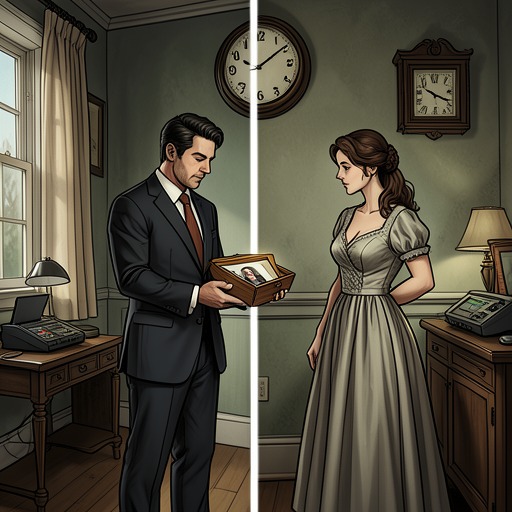
His public role has a specific place in the history of the Russo-Japanese War. As a special envoy from the court of the Tsar, he stands among the Russian and Japanese delegates who sign the treaty ending the conflict. In a photograph later examined by Mikhail Fyodorovich (Mishka), the Grand Duke appears just left of center, formally arranged with the other delegates. The image records both the diplomatic work that ended the war and the courtly identity he represents.
Godfather and Guardian
Before his diplomatic service and management of estates, the Grand Duke serves alongside the Count’s father as a cavalry cadet. That earlier companionship becomes a family bond: he is the Count’s godfather and, in practice, a watchful guardian. When the Count’s parents die of cholera within hours of one another in 1900, the Grand Duke takes the young Count aside. He tells him that he must be strong for his sister, that adversity can take many forms, and that a person who fails to master his circumstances will in turn be mastered by them.
The counsel is practical rather than consoling. It links the Count’s responsibility to his sister with the larger task of meeting whatever difficulties follow, and it gives discipline a moral purpose: maintaining command of one’s life is necessary not only for oneself but for someone dependent on one’s strength. The Count later runs his hand across the surface of the Grand Duke’s desk, a gesture that connects remembered advice to a tangible inheritance. The desk’s indentations prompt reflection on how many instructions, arguments, and counsel may have been formed there, though the narrative does not identify any particular mark as the trace of a specific conversation.
The Desk and Its Hidden Compartments
Built in the Paris of Louis XVI, the desk has gilded accents and a leather top. The Grand Duke leaves it to the Count, making it both a personal bequest and an object associated with a long working life. Over more than forty years, its surface has borne concise instructions to caretakers, persuasive arguments to statesmen, and careful counsel to friends. These varied uses make the desk a material record of the Grand Duke’s practical and public roles: its history extends from household management to political persuasion and private friendship.
The Count discovers another, concealed function. After returning to his quarters, he sits on the floor, reaches behind the desk’s right front leg, and finds a catch. Pressing it opens a seamless door onto a velvet-lined hollow stacked with pieces of gold. The other three legs also contain hollows filled with gold. The revelation gives the desk a secret interior beneath its cultivated exterior, but the evidence establishes the hiding place without explaining when or why the gold was stored there. Its construction and concealment add a literal dimension to the inheritance: the Grand Duke’s legacy includes an object of use, a repository of memory, and a concealed reserve whose origin remains unstated.
Death and Remembrance
At Idlehour Estate in 1910, Mikhail Fyodorovich (Mishka) witnesses the Rostovs’ custom of gathering on the tenth anniversary of a family member’s death to raise a glass of Châteauneuf-du-Pape. The Grand Duke is given the honor of raising the first glass in memory of the Count’s parents, who died just hours apart. The ceremony places him inside the family’s practice of remembrance even as it recalls his role as the Count’s guardian.
The Grand Duke dies on the back of his horse on September 21, 1912, exactly ten years before the scene of recollection. Mikhail Fyodorovich (Mishka) regards him as a formidable figure who seemed born in full dress, rarely sat, and never drank. His description of him as a man of another time carries reverence, not simple dismissal: the Grand Duke belongs to an older world of formal bearing, yet his counsel and the objects he leaves behind remain active in the present. When the Count appears with two Bordeaux glasses, the two old friends raise them together after Mikhail Fyodorovich (Mishka) returns the photograph to its shelf. The toast joins public history, private grief, and friendship in a single gesture, allowing the Grand Duke to be remembered through both the family he protected and the work by which he served his country.